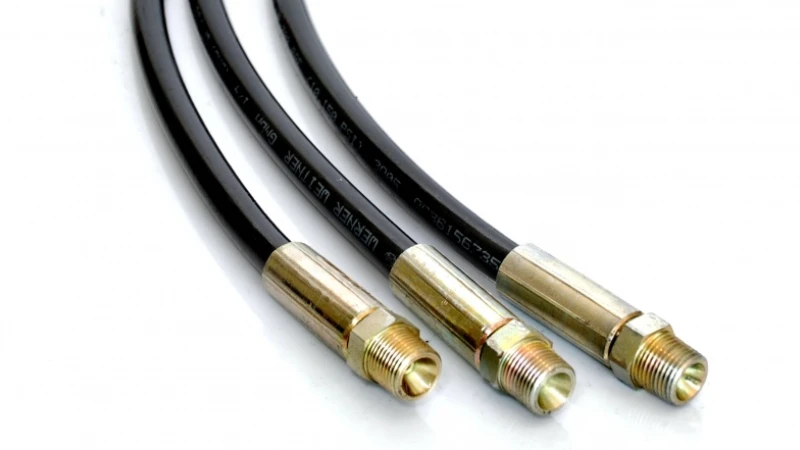
Hydraulic hoses are designed for high-pressure power transmission, while industrial hoses are made for transporting different fluids, gases, and materials. Hydraulic hoses commonly handle 1,000–6,000 psi pressure with steel wire reinforcement, whereas industrial hoses usually operate below 1,500 psi and focus on chemical resistance, temperature tolerance, and material compatibility. The correct choice depends on pressure, fluid type, temperature, and working conditions.
Hydraulic hoses and industrial hoses may look similar from the outside, but their internal structures and engineering purposes are different. Hydraulic hoses are mainly used in systems where pressurized fluid creates mechanical movement, such as excavators, loaders, agricultural machines, and hydraulic presses.
Industrial hoses are designed for moving materials such as water, air, chemicals, steam, food products, and abrasive substances. Their design focuses on safe transportation rather than transferring hydraulic power. In many industrial facilities, hose selection is based on pressure, temperature, and the properties of the transported material.
Hydraulic hoses are pressure components used in hydraulic systems, while industrial hoses are transfer components used across many industries.
The difference starts with pressure capacity. Hydraulic systems often operate under high pressure because fluid pressure is used to generate force. A hydraulic hose may work continuously at 3,000 psi or higher, while some reinforced models can exceed 6,000 psi.
Industrial hoses usually operate at lower pressures. Many water, air, and chemical hoses are rated between 150 and 500 psi, although some heavy-duty versions can reach around 1,500 psi. Pressure requirements influence reinforcement design, wall thickness, and hose flexibility.
| Feature | Hydraulic Hose | Industrial Hose |
|---|---|---|
| Main application | Hydraulic power systems | Fluid and material transfer |
| Common pressure range | 1,000–6,000 psi | 150–1,500 psi |
| Main reinforcement | Steel wire braid or spiral wire | Textile, wire, or composite layers |
| Typical fluids | Hydraulic oil, synthetic fluids | Water, chemicals, air, steam, food materials |
| Main requirement | Pressure resistance | Compatibility and durability |
The reinforcement layer creates one of the largest structural differences. Hydraulic hoses often use braided steel wire or spiral steel wire because they must withstand repeated pressure increases and decreases.
For example, SAE 100R12 hydraulic hoses are designed for high-pressure applications with multiple spiral wire layers. These hoses are commonly used in construction machinery where movement and vibration occur thousands of times during operation.
Industrial hoses use different reinforcement methods depending on the application. A chemical hose may use textile reinforcement because flexibility and chemical resistance are more important than extreme pressure strength. A material handling hose may include additional abrasion-resistant layers to transport sand, cement, or minerals.
Material selection also separates the two hose categories. Hydraulic hoses commonly use synthetic rubber materials such as nitrile rubber (NBR), which provides resistance to petroleum-based hydraulic fluids. The outer cover is usually designed to withstand abrasion, weather exposure, and ozone aging.
An industrial hydraulic hose requires specific materials because hydraulic oil, pressure cycles, and mechanical movement can affect hose performance over time.
Industrial hoses use a wider variety of materials because applications vary significantly. Common materials include:
-
PVC for lightweight water and air transfer.
-
EPDM for heat, weather, and chemical resistance.
-
PTFE for aggressive chemicals and high-temperature applications.
-
Silicone for food processing and medical environments.
Temperature requirements create another major difference. Hydraulic equipment often works outdoors where hoses may experience temperatures from approximately -40°C to 100°C depending on the machine and fluid type.
Steam and chemical industrial hoses may face higher temperatures. Some steam hoses are designed for continuous service near 200°C, while PTFE-based hoses can handle temperatures above 260°C in suitable applications.
The working environment also affects hose design. Hydraulic hoses installed on mobile equipment experience vibration, bending, and pressure pulses. A construction machine may operate for thousands of hours annually, creating repeated mechanical stress on hose assemblies.
Industrial hoses usually face different conditions. A food processing hose may require frequent cleaning cycles, while a chemical transfer hose must resist specific substances for long periods. Hose manufacturers normally test compatibility with the intended fluid before approving a product.
A hose that performs well in one application may fail quickly in another because pressure, temperature, and fluid conditions are different.
Installation methods are another area where hydraulic and industrial hoses differ. Hydraulic hose assemblies require correct fittings, proper crimping dimensions, and suitable routing. Incorrect assembly can reduce service life and increase failure risk.
Industry maintenance reports have shown that installation errors contribute to around 30%–40% of premature hydraulic hose failures. Common problems include incorrect hose length, excessive bending, poor routing, and unsuitable fittings.
Industrial hoses also require correct installation, but the focus is often related to flow efficiency and connection safety. For example, a hose used for chemical transfer must avoid contact with incompatible materials, while a suction hose must maintain enough stiffness to prevent collapse.
Standards provide another distinction between these hose types. Hydraulic hoses commonly follow standards such as SAE J517, ISO 18752, and EN 853/856. These standards define pressure ratings, dimensions, and performance requirements.
Industrial hoses follow application-specific standards. Food hoses may require sanitary certifications, chemical hoses must meet chemical resistance requirements, and petroleum hoses often follow standards related to fuel and oil transfer.
The service life of both hose types depends on operating conditions. A hydraulic hose in heavy machinery may require replacement after several years, while a properly selected industrial hose may operate longer in a controlled environment.
A comparison of common replacement factors:
| Factor | Hydraulic Hose | Industrial Hose |
|---|---|---|
| Main aging cause | Pressure cycles and abrasion | Chemical exposure, temperature, abrasion |
| Inspection focus | Leakage, cracks, deformation | Surface damage, swelling, material change |
| Common failure type | Burst or fitting separation | Leakage or inner tube deterioration |
Safety considerations are also different. Hydraulic hose failures can release high-pressure fluid that may damage equipment or injure operators. A 3,000 psi hydraulic leak can create a narrow fluid stream with enough force to penetrate skin.
Industrial hose failures usually relate to leaks, contamination, or interruption of material transfer. Chemical leakage can damage equipment and create workplace safety concerns, while food hose failure may affect product quality.
Choosing between hydraulic and industrial hoses requires checking several technical factors:
-
Working pressure and pressure spikes.
-
Fluid compatibility.
-
Temperature range.
-
Required flexibility.
-
Environmental exposure.
-
Industry standards.
A hydraulic hose should not replace an industrial hose in chemical transfer applications because its material may not resist the chemical being transported. Likewise, an industrial hose should not be installed in a high-pressure hydraulic circuit because its reinforcement structure may not handle repeated pressure cycles.
Hydraulic hoses and industrial hoses serve different engineering needs. Hydraulic hoses are built for controlled power transmission under high pressure, while industrial hoses are developed for reliable transfer of various materials under different operating conditions. Selecting the correct hose type improves equipment reliability, reduces maintenance frequency, and supports safer operation across industrial applications.