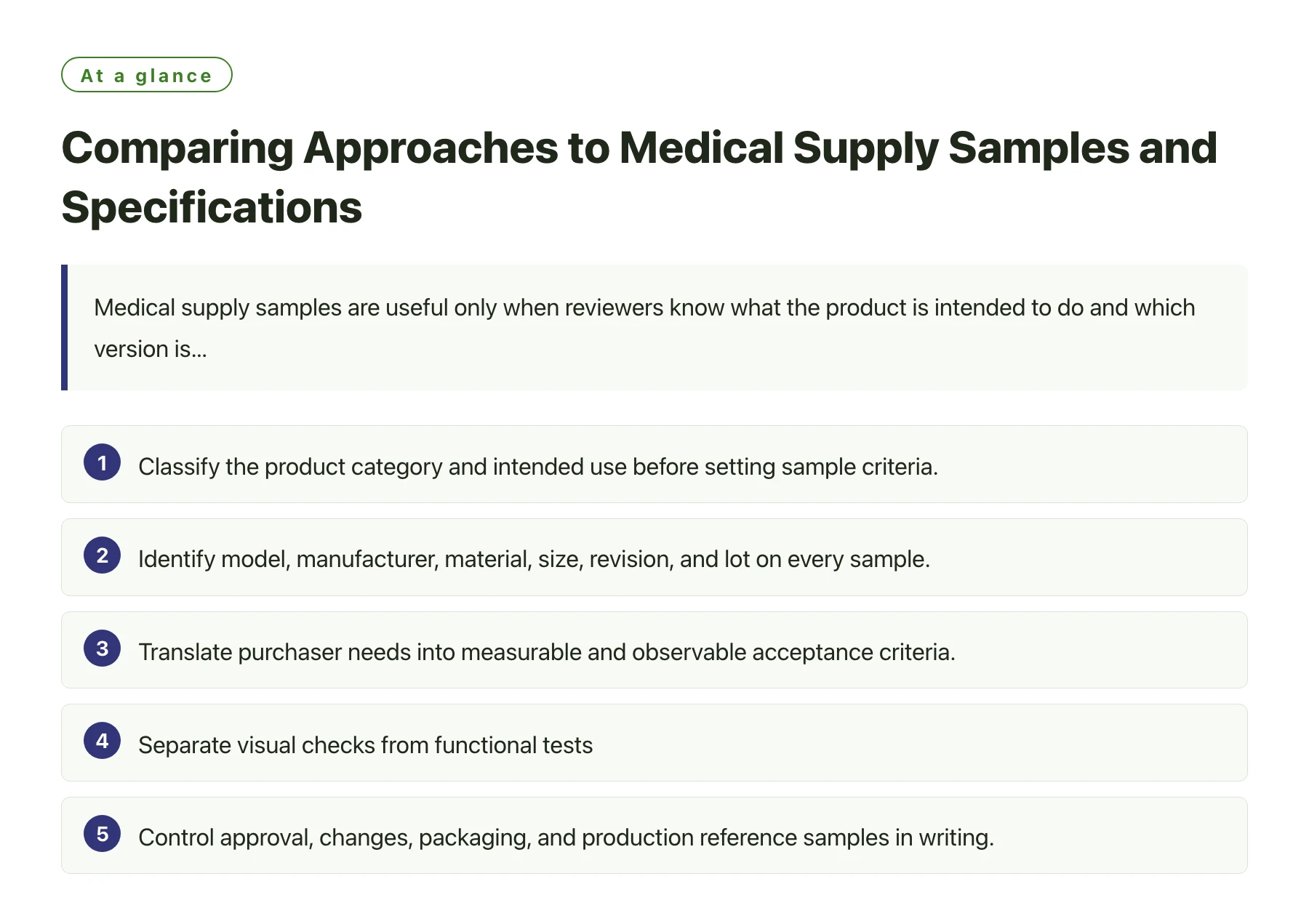
Medical supply samples are useful only when reviewers know what the product is intended to do and which version is being evaluated. Define product identity, materials, dimensions, performance, packaging, labeling, and destination requirements before comparing samples. Separate aesthetic preferences from critical function and compliance evidence. If an item may be a regulated medical device, route classification and regulatory questions to a qualified owner; a sample review does not establish authorization for sale or use.
Key takeaways
- Classify the product category and intended use before setting sample criteria.
- Identify model, manufacturer, material, size, revision, and lot on every sample.
- Translate purchaser needs into measurable and observable acceptance criteria.
- Separate visual checks from functional tests, laboratory evidence, and regulatory review.
- Control approval, changes, packaging, and production reference samples in writing.
Compare each offer and sample through a common review matrix rather than relying on a single preferred specimen.
1. Start by defining the product and intended use
List the item name, manufacturer, model, user, environment, contact conditions, reusability, sterility status if applicable, and clinical or operational function. Medical supplies can include regulated devices, protective products, general consumables, or accessories with different obligations. Do not assume that a product is or is not a device based only on the supplier’s category label.
For products intended for the U.S. market, FDA explains that device classification is based on intended use and indications for use as well as risk. Ask a qualified regulatory owner to confirm whether that framework applies and which route is relevant to the exact item. Other markets have their own definitions and pathways. [1]
2. Build a controlled specification
Write measurable requirements for dimensions, materials, components, color, weight, interfaces, function, shelf life, storage, and packaging where they matter. Cite a controlled drawing or standard and include revision, unit, tolerance, test method, and acceptance limit. Identify mandatory characteristics separately from preferences such as visual finish or packaging style. A supplier cannot provide a meaningful comparison when each quotation assumes a different specification.
For disposable or patient-contact products, have the technical and regulatory owners identify which material, biocompatibility, sterility, cleanliness, or performance evidence is required. Do not add generic tests without a risk basis, and do not treat a catalogue statement as test evidence. Ask suppliers to list deviations and unanswered questions line by line.
3. Make each sample traceable
Label every sample with supplier, manufacturer, model, lot or batch when available, production site, date, material, revision, and packaging configuration. Photograph labels and record the source of each item. Confirm whether the sample is a production unit, engineering prototype, hand-finished display item, or stock sample. These categories can look similar while differing in process, materials, and release controls.
If samples arrive from several suppliers, use the same identification and review form. Keep samples sealed or stored as required for their condition, and record who handled them. Where a sample is destructive-tested, note which tests were performed and retain photographs or records before disposal. This makes the comparison repeatable and prevents an attractive but unidentified specimen from becoming the reference.
4. Compare visual, dimensional, and functional evidence
Review visible workmanship, fit, finish, markings, completeness, and packaging under agreed conditions. Measure dimensions using the method and instrument appropriate to the feature. If a function test is required, specify setup, operating sequence, repetitions, load or setting, and expected result. Record data against the exact sample ID rather than writing only “pass” or “looks good.”
Separate non-destructive sample review from laboratory or specialized testing. A buyer may inspect a seal, connection, label, or fit, but may not be qualified to establish sterility, electrical safety, chemical composition, or clinical performance. Define who interprets each result and which accredited or authorized body is required when applicable.
5. Match documents to the sample
Ask for technical sheets, drawings, test reports, quality certificates, declarations, instructions, and packaging artwork as relevant. Match the manufacturer, model, material, site, sample description, test method, result, date, and scope. A report for a similar product, different factory, or prior material revision may not support the sample under review.
Create a document register that labels each file verified, supplier-stated, pending, expired, or not applicable. Check issuer status where the scheme requires it and preserve the date and method of verification. A management-system certificate does not establish product performance. Route regulatory statements and market claims to the importer’s qualified compliance owner rather than treating a supplier document as legal approval.
6. Compare supplier approaches consistently
Use a side-by-side table with sample identity, specification match, test evidence, lot control, packaging, lead time, minimum quantity, price, shelf-life assumptions, and open risks. Ask suppliers to answer the same questions and identify exceptions. Differences should be visible: one sample may match the dimensions but lack material traceability; another may have complete documentation but need packaging revision.
Check how each supplier makes production samples and controls changes. Ask how incoming materials are verified, how lot numbers are assigned, how nonconforming goods are segregated, and how a factory or component substitution is approved. If the supplier outsources sterilization, testing, or packaging, identify the responsible site and the records that connect those steps to the delivered lot.
7. Approve the reference and control changes
Once selected, document the approved sample with buyer and supplier sign-off, date, specification revision, photographs, test results, and any limitations. State whether it is for appearance, dimensions, function, packaging, or all listed characteristics. Keep one reference sample with the responsible party under agreed storage conditions. Approval should not cover requirements that were never tested or reviewed.
Require written change notice for material, component, manufacturing site, tooling, process, label, packaging, or test method changes. Assess whether a new sample, test, or regulatory review is needed. Do not silently replace a sample or update artwork to match production after approval. Keep old and new references with an effective date so the production team can follow the correct version.
8. Connect sample approval to order release
Before production, confirm the final specification, purchase order, sample status, required documentation, inspection plan, and shipment conditions all refer to the same version. Set gates for sample, first article, production, final inspection, and release. If a critical requirement remains unresolved, identify the affected order scope and hold point rather than relying on a general sample acceptance.
At receipt, reconcile delivered model, lot, labels, packaging, and evidence with the approved reference. Record damages, shortages, and deviations before distribution. Buyers working through medical supplies sourcing can use one sample register across suppliers while preserving product-specific criteria and regulatory decisions for each item.
Sources
Frequently asked questions
What should a medical supply sample label include?
Record supplier, manufacturer, model, production site, lot or batch if available, date, material, revision, and packaging. Link photographs and documents to the same identifier.
Does sample approval confirm regulatory compliance?
No. It records a decision about the reviewed characteristics and evidence. A qualified owner must determine market classification, required submissions, labeling, and other regulatory obligations.
Can suppliers be compared using their catalogue samples?
Only as an initial screen. Confirm each sample’s identity, production status, revision, and evidence, then compare it against the same controlled specification and intended use.
When should a new sample be requested?
Request one when a change to material, design, factory, process, function, packaging, or labeling could affect requirements or the approved reference. Document the change and review scope.